私たちはAIモビリティをリードします

2005 年に設立された MOBILUS は、モバイルおよび車載電子機器の運用における車両 IT の統合と開発に大きく貢献しています。 MOBILUSの目標は、より良い生活を実現するために、完全な無人運転と無人運転を実現することです

We Make AI Mobility

MOBILUSは、現在モビリティ電装事業に注力しており、インフォテイメントシステムやクラスター、AR-HUD分野の技術を強固なものにしています。

  • IVI System

    私たちはグローバル自動車OEM等のIVIシステムを開発し、HMCKの海外輸出向けIVIシステムを生産・供給しました。

  • Unmanned drinving & umanned work

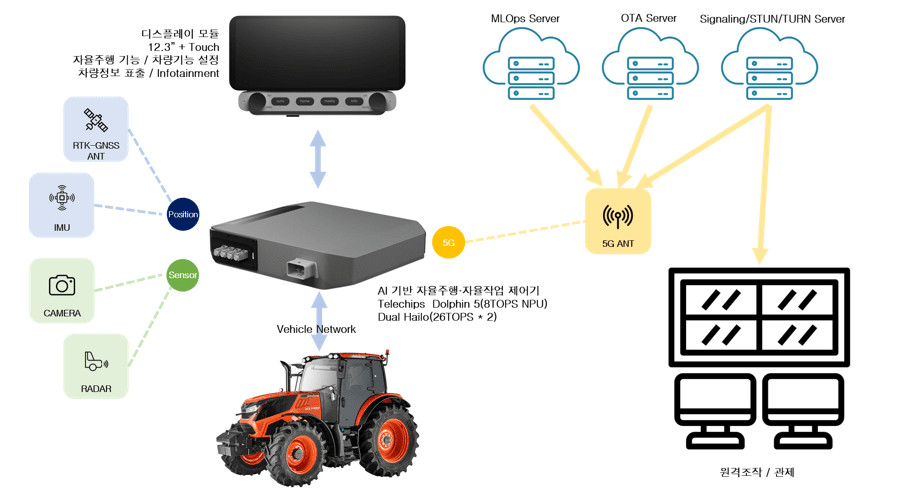
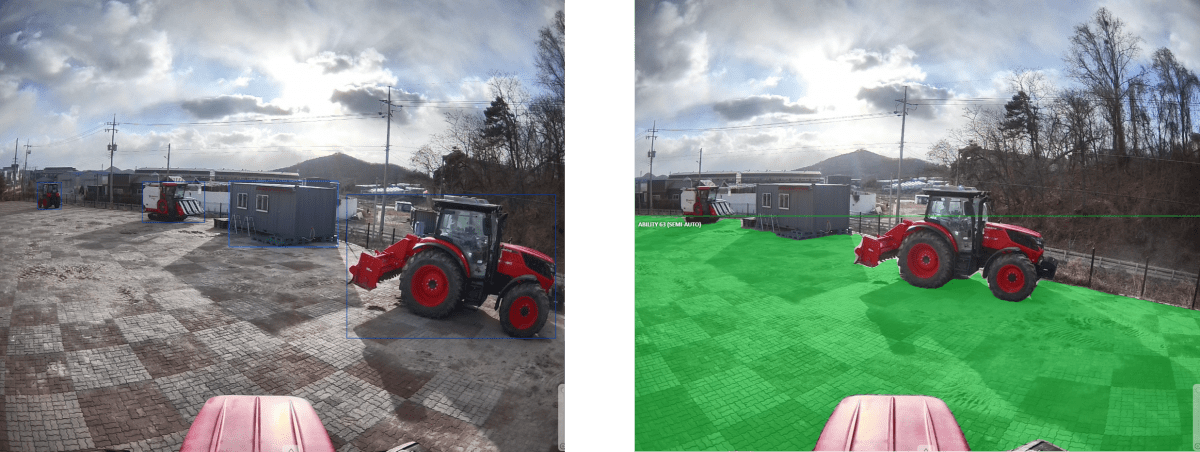
    建設機械と農業機械のためのClusterシステムを開発・供給しており、農業機械分野の自律走行システムを作りました。今後は、AIベースの自律走行システムを様々なモビリティ分野に供給する予定です。

  • Intelligent Technology

    光学原理に従って動き、車両の前方に速度やナビゲーション、ADAS等の情報をリアルタイムで表示します。知能型コックピット体験を改善し、さらに賢い探索を可能にする技術を作っております。

What we do

MOBILUSは、グローバル自動車OEMのIVIシステム開発とHKMC輸出向けIVIシステムを生産・供給しており、IVIシステムやクラスター、AR-HUD分野の技術を強固なものにしています。

未来のために農業機械自律走行ソリューション事業を皮切りに、オフロードモビリティ用自律走行ソリューション事業や、様々な産業界で導入しやすいオフロード用自律走行電気モビリティプラットフォーム事業を進めています。

  • Autonomous Driving Module
  • Unmanned Mobility Vehicle
  • IVI System

News

2025.12.22
CES 2026 Highlights ‘Innovation Density’ as the Defining Keyword for Korea

The Consumer Technology Association (CTA) has identified “innovation density” as the key phrase defining Korea’s presence at CES 2026.

CES 2026 will be held from January 6 to 9, 2026, in Las Vegas, bringing together innovators from around the world. It serves as a global “meeting ground” where the latest products and transformative partnerships are unveiled across all areas of technology, including AI, digital health, robotics, energy, and immersive entertainment.

According to the CTA, Korea is expected to further strengthen its presence on the global stage at this year’s CES, backed by innovation capabilities spanning from deep tech to lifestyle applications.

The CTA highlighted Korea’s key strength as its ability to make the entire innovation value chain—from research and pilot testing to commercialization—visibly tangible on the exhibition floor.

Not only major conglomerates but also local governments, public institutions, and startup clusters come together, creating a national-level “full-stack ecosystem” that unfolds multidimensionally throughout the venue.

Public-sector participants such as Korea Hydro & Nuclear Power, along with emerging companies including DataMatica and Mobilus, will also take part, showcasing the diversity and structural depth of Korea’s innovative ecosystem.

John T. Kelley, Vice President of the CTA and CES Show Director, said, “CES partners with participating companies to help them achieve their business goals, whether that’s gaining visibility or securing meeting space. CES is truly a global event, and we are proud to welcome a large delegation of Korean government officials this year.”

At CES 2026, Hyundai Motor Group will participate on its largest scale ever, including exhibition space at West Hall 5319.

Doosan Bobcat, Hyundai, and LG will hold press briefings during the CES Media Day on January 5. Samsung Electronics will host its “The First Look” event at 7:00 p.m. on January 4 at the La Tour Ballroom of The Wynn Hotel. The Wynn is an official CES venue and also hosts exhibitions by companies such as Google, Meta, Microsoft, and Qualcomm.

The CTA explained that Korea stands out at CES “not because it is everywhere, but because at every point of participation, it shows both the beginning and the end of innovation—research, validation, and commercialization.”

Ideas originating from basic research progress through applied deep tech and evolve into consumer-ready products and services, enriched by cultural influence—all observable in a single place.

On the exhibition floor, bold ideas still in their early stages are unveiled, some of which return at the next CES as proven success stories, creating a virtuous cycle. Organizations such as KOTRA, KICTA, KIST, and KISED also showcase Korean innovation together, highlighting the ecosystem’s breadth.

The keyword representing Korea at this CES is “region.” Local governments are effectively transporting their innovation clusters directly to Las Vegas.

Busan will operate the “Team Busan 2.0” Pavilion, while Daejeon will establish an integrated pavilion at Eureka Park to support global readiness programs for startups.

Seoul’s Gwanak District will run the “Gwanak S-Valley” Pavilion, and Gyeonggi Province will foster climate tech and mobility startups based in Pangyo Techno Valley. The City of Seoul will operate a joint pavilion with 70 startups, expanding global visibility through its core innovation hubs.

The theme of CES 2026 is “Innovators Show Up.” The CTA stated, “We expect Korean innovators at CES 2026 to define the standard of innovation—not by scale, but by quality, execution capability, and a Lab-to-Life ecosystem that connects research directly to everyday life.”

2025.12.22
“Government Honors Top Performers in Civil–Military Technology Cooperation, Pledges Continued Investment Expansion”

The government has pledged to expand investment in civil–military technology cooperation projects and to honor individuals who have achieved outstanding results in this field.

The Ministry of Trade, Industry and Energy announced on the 16th that it jointly hosted the “2025 Civil–Military Technology Cooperation Project Performance Presentation” with the Defense Acquisition Program Administration (DAPA). The performance presentation has been held annually since 2012 to promote and disseminate exemplary outcomes of civil–military technology cooperation.

At the awards ceremony held during the event, Ministerial Commendations from the Ministry of Trade, Industry and Energy were presented to Shin Dong-hwan, Principal Researcher at the Korea Institute of Machinery and Materials, for developing cooling technology for high-heat-generating equipment such as lasers; Jung Han, CEO of i3system, for developing the world’s first ultra-compact, high-resolution uncooled infrared detector; and Lee Seong-geun, CEO of Hanji IS, for developing localization technology for high-performance ground bodies used in 30-meter-class parachute drop training.

Commendations from the Commissioner of the Defense Acquisition Program Administration were awarded to Park Seung-su, CEO of Sonatech, for developing sonobuoys—acoustic detection devices for submarine detection—and to Choi Sung-gyun, Director of the Artificial Intelligence Research Center at Mobirous, for developing an autonomous driving control system for tractors using military autonomous driving technology.

At the subsequent Civil–Military Business Forum, participants announced plans for next year’s civil–military technology cooperation projects, as well as research and development directions for new projects focusing on core technologies for manned–unmanned integrated systems, including artificial intelligence (AI) and unmanned systems.

The Civil–Military Technology Cooperation Project, which began in 1999, is a representative pan-governmental collaboration initiative that has established itself as an innovation platform enhancing both Korea’s technological security capabilities and industrial competitiveness by breaking down barriers between defense and industry.

Last year, sales generated by companies participating in civil–military projects reached 190.2 billion won, representing an increase of approximately 121% compared to 86 billion won in 2020. Over the past five years, the commercialization rate has remained high at 75.3%.

Lee Sun-hye, Director of the Advanced Civil–Military Innovation Support Division at the Ministry of Trade, Industry and Energy, stated, “As demand grows for the advancement of the defense industry through the convergence of cutting-edge technologies such as AI, the importance of dual-use technology development—where civil and defense technologies have strong mutual spillover effects—is increasing. We will continue to expand investment in civil–military technology cooperation projects to support Korea’s leap toward becoming one of the world’s top four defense powers.”

Would you like
to join us?

About Careers